
Religious Education Teachers Wearing Religious Symbols in State Schools: Is “a Completely Neutral Educational Space” Possible?
by Adriaan Overbeeke
Question(s) at stake
1) Whether a public-authority school can expand a ban on wearing religious signs based on its neutrality policy to apply to religious education teachers (when they are outside their classrooms), or whether the school must provide an exception for this particular category. 2) Whether the constitution places limits on the neutrality principle as it applies to state schools, given that the constitution also requires these schools to offer a wide range of religious courses taught by a special category of teachers who must be able to credibly represent their religion in their position at these public-authority schools.
Outcome of the ruling
-
If it has not been shown that a religious education teacher, in the performance of her assignments, adopts an attitude that demonstrates indoctrinatory or proselytory zeal or wears a religious symbol, in this case a headscarf, as an act of aggression to exert pressure or provoke a reaction, a ban on wearing such a symbol violates the teacher’s religious freedom. The school treats categories of persons who are in substantially different situations identically with regard to the prohibition in question outside the classroom, without reasonable justification.
-
The constitutional principle of neutrality that applies to state education is circumscribed by the duty, also enshrined by the constitution as a fundamental right, to provide religious courses in state schools. A ban on wearing religious symbols in a state school therefore cannot be applied to religious education teachers.
Country:
Official citation
Council of State, Judgment of 01 February 2016, No. 233.672 (Conseil d’Etat, arrêt du 1 février 2016, n° 233.672)
Topic(s)
Keywords:
Hijab Non-discrimination Public authorities' schools RE teachers (Teachers of Religion Education) State neutrality Teachers Employment requirements Religious and cultural symbols Attire Rights and freedoms Freedom of thought, conscience and religion Limitations and justifications Legitimate (state) aims Protection of the rights and freedoms of others State approaches and constitutional framework Civil servants
Tag(s):
Bibliographic information
Access case report
View case report in the CUREDI databaseAbout the authors
Adriaan Overbeeke (Faculty of Law, VU University Amsterdam - Faculty of Law, Universiteit Antwerpen, Belgium)

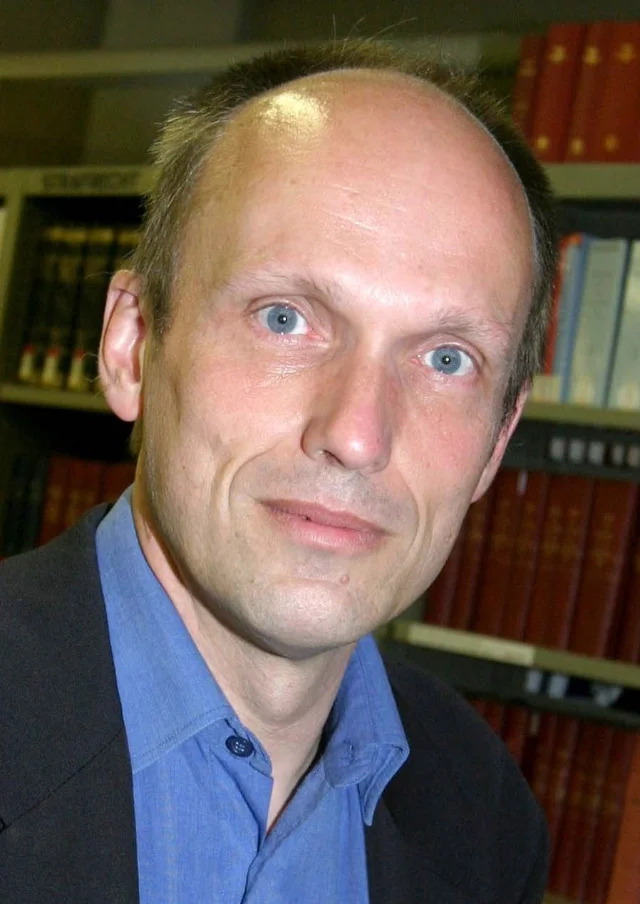
Adriaan Overbeeke holds a BA degree in Political & Social Sciences from the University of Antwerp (Belgium), and received a MA degree in Political Sciences from the Katholieke Universiteit Leuven, a MA decree in Law and a PhD degree in Law both from the University of Antwerp (Belgium). In his PhD thesis, ’The state and the human rights position of religious and life stance communities: the protection of corporate aspects of religious freedom in the Belgian Constitution, in the context of international treaties' (thesis supervisor Prof. Dr. Jan Velaers) he researched the evolving legal status of religious (minority) groups in the context of Belgian constitutional law.
Currently he is a Researcher at the Faculty of Law of both the Vrije Universiteit Amsterdam and the University of Antwerp and a member of the Board of the Institute for Jewish Studies (University of Antwerp).
Overbeeke’s current research deals with the collective aspects of the human rights protection of religious diversity throughout Europe, also in a historical perspective. For CUREDI he acts as a reviewer and is a member of the coordination team and the editorial board.